
Green Chimneys
Thelonious Monk
ComposerAABA - 32 bars
FormSearch Green Chimneys lead sheets:


Recordings & Segments
2021
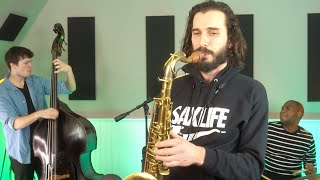
Green Chimneys
Thelonious Monk Tribute - Chad LB Quartet - 2021
2020

Green Chimneys
Quartet Sessions - Chad Lefkowitz-Brown - 2020
Solos
Acoustic Bass

Alex Claffy - Acoustic Bass solo - 2020
4/4 swing in A♭ minor at 188 bpm

Dan Chmielinski - Acoustic Bass solo - 2021
4/4 swing in A♭ minor at 193 bpm
Piano

Steven Feifke - Piano solo - 2020
4/4 swing in A♭ minor at 186 bpm
Steven Feifke - Piano solo - 2021
4/4 swing in A♭ minor at 190 bpm
Tenor Sax

Chad Lefkowitz-Brown - Tenor Sax solo - 2020
4/4 swing in A♭ minor at 181 bpm
Chad Lefkowitz-Brown - Tenor Sax solo - 2021
4/4 swing in A♭ minor at 192 bpm