

Kind of Blue - Miles Davis
Kind of Blue
AlbumMiles Davis
Artist1959
Year ReleasedRecordings

So What
Miles Davis - So What - 1959
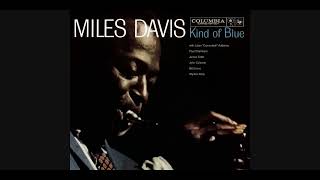
Freddie Freeloader
Miles Davis - Freddie Freeloader - 1959
Blue in Green
Miles Davis - Blue in Green - 1959
All Blues
Miles Davis - All Blues - 1959

Flamenco Sketches
Miles Davis - Flamenco Sketches - 1959
Solos
All Blues

Miles Davis - Trumpet solo - 1959
6/8 swing in G major at 138 BPM

Julian "Cannonball" Adderley - Alto Sax solo - 1959
6/8 swing in G major at 140 BPM

John Coltrane - Tenor Sax solo - 1959
6/8 swing in G major at 141 BPM

Bill Evans - Piano solo - 1959
6/8 swing in G major at 142 BPM
Blue in Green
Bill Evans - Piano solo - 1959
4/4 ballad in D minor at 57 BPM
John Coltrane - Tenor Sax solo - 1959
4/4 ballad in D minor at 57 BPM
Bill Evans - Piano solo - 1959
4/4 ballad in D minor at 116 BPM
Miles Davis - Trumpet solo - 1959
4/4 ballad in D minor at 28 BPM
Flamenco Sketches
John Coltrane - Tenor Sax solo - 1959
4/4 ballad in C major at 57 BPM
Julian "Cannonball" Adderley - Alto Sax solo - 1959
4/4 ballad in C major at 60 BPM
Bill Evans - Piano solo - 1959
4/4 ballad in C major at 59 BPM
Miles Davis - Trumpet solo - 1959
4/4 ballad in C major at 59 BPM
Freddie Freeloader

Wynton Kelly - Piano solo - 1959
4/4 swing in B♭ major at 129 BPM
Miles Davis - Trumpet solo - 1959
4/4 swing in B♭ major at 127 BPM
John Coltrane - Tenor Sax solo - 1959
4/4 swing in B♭ major at 129 BPM
Julian "Cannonball" Adderley - Alto Sax solo - 1959
4/4 swing in B♭ major at 130 BPM

Paul Chambers - Acoustic Bass solo - 1959
4/4 swing in B♭ major at 130 BPM
So What
Miles Davis - Trumpet solo - 1959
4/4 swing in D minor at 136 BPM
John Coltrane - Tenor Sax solo - 1959
4/4 swing in D minor at 139 BPM
Julian "Cannonball" Adderley - Alto Sax solo - 1959
4/4 swing in D minor at 139 BPM